So you’ve just finished a construction project in Brisbane. Congratulations! You’re probably exhausted, over budget, and looking at what appears to be a war zone disguised as a building site. Welcome to the glamorous world of construction—where nothing is ever truly “finished” until someone deals with the aftermath.
Here’s the thing about construction: it creates an absolutely spectacular mess. We’re talking layers of dust that get everywhere (and we mean everywhere), paint splatters that somehow defy gravity, adhesives that stick to things they shouldn’t, and enough debris to make you question whether the builders were constructing or demolishing.
But this isn’t just about aesthetics. Post-construction cleaning is actually a safety issue, and there are real standards that need to be met before anyone should be moving into or using that space.
Why “Good Enough” Isn’t Good Enough
Look, we get it. You’re tired. The project has probably taken longer and cost more than planned (they always do). The temptation to grab a broom, do a quick sweep, and call it done is real. But here’s why that’s a terrible idea:
Construction Dust Is Nasty Stuff That fine layer of dust covering everything isn’t just annoying—it’s genuinely hazardous. We’re talking silica particles from cutting concrete and tiles, gypsum dust from drywall, sawdust, cement dust, and various other particles that you really don’t want in your lungs.
Silica dust is particularly problematic. Long-term exposure causes silicosis, a serious lung disease. Even short-term exposure can trigger respiratory issues, especially for kids, elderly folks, or anyone with existing breathing problems.
This stuff is so fine that regular vacuums just blow it around. You need HEPA filtration to actually capture it. Sweeping? You’re basically just moving it from the floor to the air, where everyone breathes it in. Great job.
The Obvious Safety Hazards Construction sites leave behind delightful surprises like:
- Screws and nails hiding in corners
- Sharp metal fragments
- Splinters from wood cutting
- Broken glass or tile pieces
- Exposed adhesives that stick to feet
- Slippery residues on floors
Any one of these can send someone to the emergency room. Not exactly the “welcome home” or “open for business” experience you’re going for.
The Not-So-Obvious Issues Then there’s the stuff you don’t see immediately but causes problems later:
- Chemical residues from paints, adhesives, and sealants that off-gas VOCs
- Moisture trapped in materials causing mold growth
- Debris in HVAC systems circulating contaminated air
- Sticky residues attracting dirt
- Improperly cleaned surfaces degrading faster than they should
Professional builders cleaning in Brisbane addresses all of this systematically, not just the obvious surface dirt.
The Real Standards (Not the “Looks Clean to Me” Standard)
Different occupancies have different cleanliness requirements, and they’re not arbitrary:
Residential Standards: Homes need to be safe for immediate occupancy, which means:
- All dust removed from all surfaces
- Windows clean and free from protective film residue
- All fixtures functional and clean
- Floors cleaned and sealed (if applicable)
- No construction debris anywhere
- Air quality suitable for human habitation
Most importantly, the space needs to pass final inspection. Inspectors look specifically for cleanliness issues that indicate incomplete work or safety concerns.
Commercial Standards: Commercial cleaning requirements are often more stringent:
- Hospital-grade cleanliness for medical facilities
- Food-safe standards for restaurants and cafes
- White-glove standards for retail and office spaces
- Specific standards for schools and childcare centers
- Compliance with OH&S regulations for workplace safety
Failure to meet these standards can delay occupancy, fail inspections, or create liability issues. That’s expensive.
The Handover Standard For builders and contractors, the handover clean determines whether you get paid promptly or spend weeks dealing with complaints and rectification work. Clients expect pristine conditions, and they’re not shy about rejecting inadequate work.
The Three-Stage Post-Construction Clean
Professional post-construction cleaning happens in stages, not all at once. Here’s how it actually works:
Stage 1: Rough Clean (The Heavy Lifting)
This happens immediately after construction wraps. It’s all about removing the big stuff:
- All construction debris removal
- Packaging materials and wrappings
- Excess materials that didn’t get used
- Large dust accumulations
- Obvious dirt and grime
This is physically demanding work that generates lots of trash. Professional teams come prepared with industrial vacuums, heavy-duty bags, and the equipment to handle whatever they find.
At this stage, pressure washing services in Brisbane QLD might tackle exterior areas, removing concrete splatter, mud, and construction grime from driveways, pathways, and building exteriors.
Stage 2: Detail Clean (Where the Magic Happens)
Once the rough clean creates a workable space, the detail clean addresses everything else:
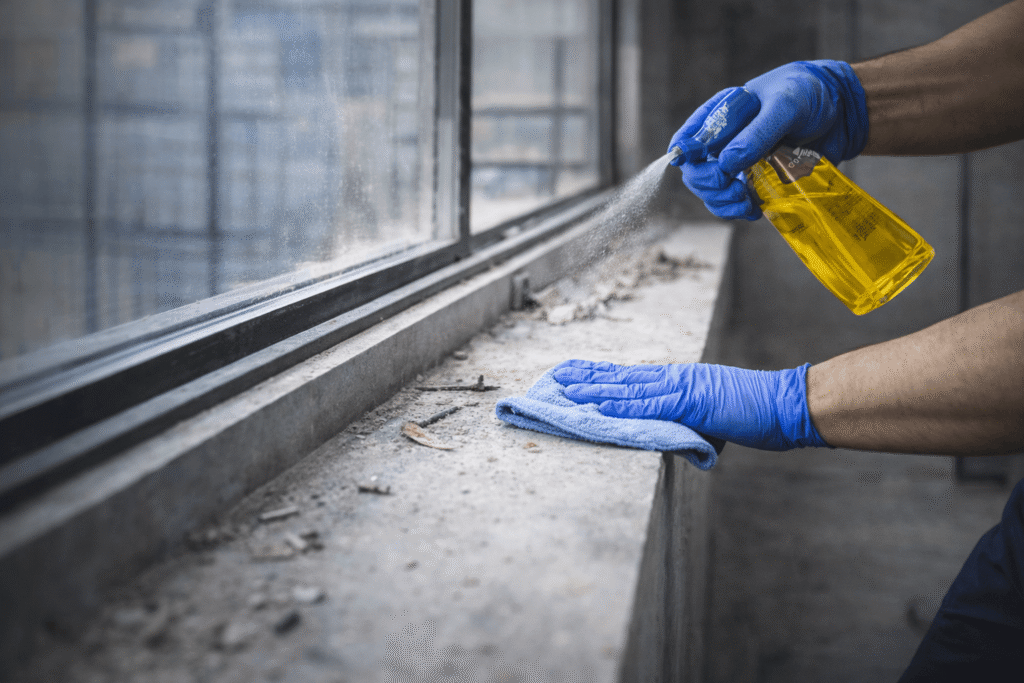
Windows and Glass: Window cleaning services in Brisbane QLD earn their keep here. Construction leaves windows with:
- Paint overspray and splatters
- Adhesive residue from protective films
- Concrete dust etched into glass
- Silicone smears
- Stickers and labels that fight removal
Each of these requires specific techniques and products. Scratch the glass with improper methods, and you’ve just created an expensive problem.
Fixtures and Fittings: Every tap, light switch, door handle, appliance, and fixture gets individual attention:
- Protective films removed (without leaving adhesive)
- Smudges and fingerprints cleaned
- Functions tested
- Surfaces polished to shine
This is tedious, time-consuming work. Each cabinet, each drawer, each appliance gets opened, cleaned inside and out, and checked for issues.
Surfaces: Different surfaces need different approaches:
Timber floors might need steam cleaning services in Brisbane QLD to remove construction dust without damage. Tiles need grout haze removal (that white film is calcium from grout that needs specific treatment). Stone surfaces require pH-neutral cleaners that won’t etch the surface.
Surface polishing services in Brisbane QLD restore shine to surfaces dulled by construction dust and traffic.
The Invisible Work: This is where professionals separate from amateurs:
- Air vents and ducts vacuumed
- Inside cabinets and drawers cleaned
- Behind appliances (where dust loves to hide)
- Door frames and architraves
- Skirting boards and cornices
- Light fixtures and ceiling fans
- Behind toilet bowls (yep, dust gets there too)
Stage 3: Final Touch (The Perfection Pass)
Before handover, a final inspection identifies anything missed. This includes:
- Touch-ups on windows
- Re-cleaning any areas that accumulated dust during work
- Final polish on fixtures
- Spot treatments for any marks discovered
- Air quality check
For high-end projects or properties with difficult access, high access cleaning services in Brisbane QLD ensure even tall facades and hard-to-reach areas meet standards.
The Safety Equipment Nobody Thinks About
Professional post-construction cleaning in Brisbane requires proper safety equipment:
Respiratory Protection: HEPA-rated respirators protect against fine dust particles. Those paper dust masks you bought at the hardware store? They’re basically decorative.
Eye Protection: Construction dust irritates eyes, and cleaning solutions can splash. Safety glasses aren’t optional—they’re necessary.
Protective Clothing: Long sleeves, long pants, and closed-toe shoes protect against cuts, scrapes, and chemical exposure. This isn’t a fashion show.
Proper Ventilation: Creating airflow that removes airborne particles rather than just moving them around requires understanding air circulation patterns and proper equipment placement.
The Chemical Knowledge You Don’t Have (And That’s Okay)
Different construction residues require different cleaning solutions:
Concrete and Grout Haze: Needs acidic cleaners to dissolve alkaline residues. Use the wrong product, and you’ve just created a sticky mess or damaged the surface.
Paint Overspray: Requires solvents that won’t damage the underlying surface. What works on concrete might strip timber finishes.
Adhesive Residues: Silicone, construction adhesive, and tape residue each need specific solvents. Generic “adhesive remover” might not cut it.
Protective Film Adhesives: Left too long, these bond to surfaces. Removing them without scratching requires patience and the right products.
Professional cleaners know this stuff. You probably don’t, and learning through trial-and-error on your new construction is expensive.
The Timeline That Actually Works
Trying to clean as construction happens is mostly futile—new dust and debris appear daily. The realistic timeline is:
Day 1-2: Rough clean after construction completion Day 3-5: Detail clean (longer for larger projects) Day 6: Final touch-up and inspection Day 7: Handover ready
Rushing this process guarantees missed items and callbacks. Taking appropriate time gets it right the first time.
For occupied renovations, the timeline adjusts but the principle remains—you can’t properly clean until work is genuinely complete, and complete means complete, not “mostly done except for those few things.”
Why DIY Post-Construction Cleaning Usually Fails
We’re not saying this to be mean, but DIY post-construction cleaning rarely meets professional standards. Here’s why:
Equipment Limitations: Your household vacuum can’t capture fine construction dust—it just redistributes it. You don’t have industrial-strength HEPA vacuums, steam cleaners, or specialized surface cleaning equipment.
Product Knowledge Gaps: That concrete haze? You probably don’t know what removes it. The paint overspray? Your household cleaners won’t touch it. The protective film adhesive? Good luck with that.
Physical Demands: Post-construction cleaning is exhausting. You’re bending, reaching, climbing, scrubbing for hours or days. Your back, knees, and arms will hate you.
Time Investment: What takes professionals 1-2 days will take you 1-2 weeks of your evenings and weekends, assuming you know what you’re doing.
Quality Inconsistency: Professionals clean thousands of square meters monthly. You’re learning as you go. The difference in results is obvious.
The Brisbane-Specific Challenges
Brisbane’s climate creates unique post-construction cleaning considerations:
Humidity and Mold: New construction materials contain moisture. Brisbane’s humidity slows drying, creating perfect mold conditions. Proper cleaning includes checking for moisture issues and ensuring adequate ventilation during the cleaning process.
Dust Behavior: Our humid air makes dust stick to surfaces rather than just sitting on them. This makes removal harder and requires better cleaning methods than in dry climates.
Exterior Cleaning: Building exteriors accumulate dirt and organic growth rapidly in Brisbane. Pressure washing should happen before handover, not months later when algae has already established.
The Insurance and Liability Angle
Here’s something most people don’t consider: liability.
If someone gets injured from construction debris you didn’t properly clean, you’re potentially liable. If a buyer or tenant discovers issues you should have addressed during post-construction cleaning, there could be legal or financial consequences.
Professional construction cleaning services in Brisbane carry insurance covering accidental damage during cleaning. Your DIY efforts? That’s all on you.
When to Schedule Post-Construction Cleaning
Too Early: Don’t schedule cleaning until construction is genuinely complete. “Almost done” means more dust, more debris, and re-cleaning everything when the work finally finishes.
Perfect Timing: Schedule cleaning immediately after the last tradesperson leaves. Don’t wait—dust settles deeper into surfaces over time, making removal harder.
Too Late: Waiting weeks means dust has bonded to surfaces, adhesives have cured, and easy-to-clean issues have become difficult problems requiring intensive treatment.
The Commercial Considerations
Commercial post-construction cleaning has additional complexity:
Compliance Requirements: Health department standards for food service, safety regulations for childcare, accessibility requirements for public spaces—these aren’t suggestions, they’re legal requirements.
Timeline Pressures: Every day your business isn’t operating is lost revenue. Professional commercial cleaning services understand urgency and work efficiently to meet opening dates.
Professional Appearance: Your business’s reputation starts the moment clients walk in. First impressions formed during those first few days are hard to change.
Your Move-In Day Deserves Better
Whether you’re moving into a new home or opening a new business, move-in day should be exciting, not a cleaning nightmare. You shouldn’t spend your first week scrubbing instead of settling in.
Professional post-construction cleaning costs a fraction of your total construction budget—usually 0.5-1% of the project cost. For that investment, you get:
- Safe occupancy conditions
- Surfaces that look their best
- Air quality suitable for human habitation
- Problems identified and reported before they become expensive
- Professional standards that pass inspections
- The ability to actually enjoy your new space
The difference between amateur and professional post-construction cleaning is immediately obvious and has lasting implications. Your new space deserves professional care that protects your investment and your health.
Construction is messy, exhausting, and expensive. The last thing you want is to cut corners on cleaning and discover problems months later that could have been addressed immediately. Cleaning services in Brisbane that specialize in post-construction work know exactly what needs to happen and how to deliver results that meet actual standards, not just “looks okay” standards.
Your construction project deserves a proper finish, and proper finish means professional cleaning that makes everything you’ve invested in look and function exactly as intended.