Brisbane’s university campuses are getting busier. The University of Queensland has reported strong growth in student offers as the city prepares for Brisbane 2032, and tertiary providers across the state continue investing in new facilities. For any contract administrator or facilities manager sourcing a campus cleaning contractor Brisbane institutions can actually rely on, the bar in 2026 sits well above a standard commercial clean.
Cleaning an active university campus comes with a different rulebook to a vacant commercial property or a standard office fit-out. Buildings stay occupied through the day and into the evening, foot traffic is constant, and cleaning crews have to work around lectures, exams, research activity and public events rather than an empty building after hours. Cleaning partners must work within strict protocols, understand the requirements of an institutional environment, and deliver consistent standards without taking shortcuts.
EPS Clean has delivered ongoing cleaning for major Queensland educational environments, including the University of Queensland and QUT, in partnership with Fara Pty — covering QUT’s L Block and campus library spaces as well as final cleaning at UQ’s St Lucia campus. For facilities managers responsible for large or complex sites, the right cleaning contractor isn’t simply the company offering the lowest price. It’s the partner that understands the scope, communicates clearly, manages variations properly, and knows what’s required to deliver a professional result on an occupied site.
Why Campus Cleaning Is a Different Job

Queensland’s own universities reflect this directly. QUT’s cleaning management policy sets out specifications that apply across every campus building, whether the work is done in-house or by a contractor, covering routine servicing, waste collection and hygiene services, all supervised by Facilities Management.
That means a contractor working on campus isn’t just cleaning a space, they’re operating inside someone else’s compliance framework, on someone else’s schedule, with no room for shortcuts.
A Final Clean, Up Close: What It Actually Involves
A final interior clean is one of the most important stages before a newly completed or refurbished space is handed over and it’s a useful case in point for how a campus job differs from a standard commercial one.
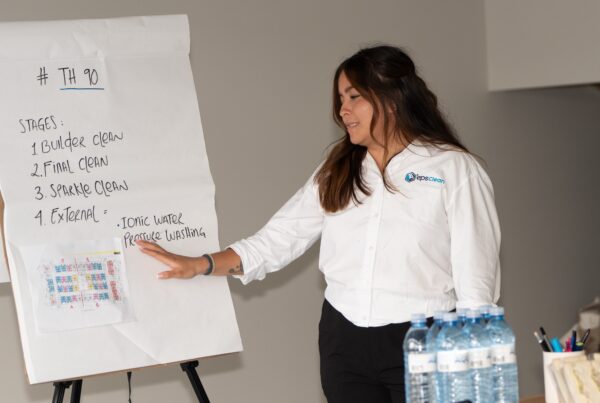
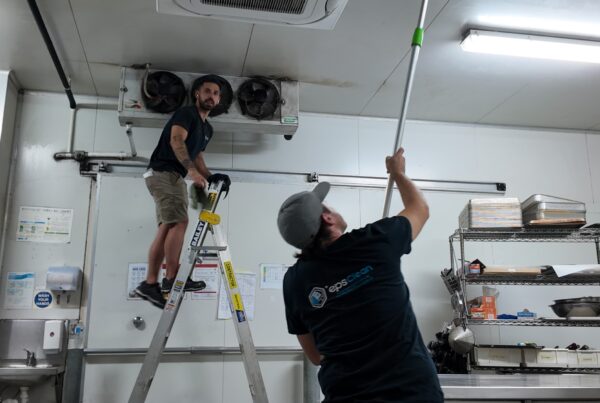
On a recent EPS Clean project delivered for Fara Pty at UQ’s St Lucia campus, the scope for one full final interior clean covered dusting, internal cleaning, window tracks and sills, skirting boards, wet areas and floors. Straightforward on paper but a professional final clean depends on everyone having a clear, shared understanding of what’s included in the agreed scope, and what would count as additional work.
For facilities managers and project teams, that distinction matters. A detailed scope helps avoid misunderstandings, unexpected costs and delays during the final stages of a project particularly on larger sites, where different surfaces, rooms, wet areas, access requirements and construction conditions can all affect the amount of work required.
Knowing What Sits Outside the Standard Clean
A final clean doesn’t automatically mean every type of construction residue or stubborn stain is included. Paint, plaster, concrete, rust, oil, grout, gap filler and silicone can require substantially more time and specialised methods than standard dusting or surface cleaning so they’re not automatically part of a standard quotation unless specifically agreed upfront. Excess debris removal (beyond a reasonable volume) and external glass cleaning typically sit outside the standard scope too, along with any access-hire equipment that specialised glass cleaning might need.
This is worth knowing when comparing cleaning contractors: a low initial quote may not reflect the final project cost if construction residue or restoration-type cleaning is discovered on site.
Managing Variations Properly
Construction and refurbishment projects change as work progresses. Where additional cleaning is needed outside the agreed scope, variations should be clearly communicated and approved in writing before the work happens
typically by email sign-off from the site manager, with additional work charged at an agreed hourly rate (ex GST) or against a separate variation quote. That process gives both parties a clear, transparent way to deal with anything that falls outside the original scope.
Why a Site Inspection Matters
A quote based on photographs and floor plans is a useful starting point, but it can’t always show the actual condition of surfaces, access limitations, construction residue or the real amount of work involved. A proper site inspection lets the cleaning contractor assess the project accurately before finalising scope and pricing, if extra time is ultimately needed on site, a good contractor flags it transparently rather than absorbing it silently or blowing out the invoice without warning.
Planning Around Institutional Schedules
University campuses run to their own calendar, and cleaning arrangements need to account for that. Work outside standard hours, weekends or public holidays should be agreed and priced at the time of contract, not assumed. Establishing cleaning dates, access windows, site availability and any restrictions early helps the final clean land within the agreed timeframe without unnecessary disruption.
What Institutions Look for in a Cleaning Partner
Beyond the mechanics of a single job, institutional and education clients want proof that a contractor’s on-site systems hold up once the crew is actually working around students, staff and researchers, not just paperwork submitted before the contract was signed. For facilities and project teams, a few things tend to come up again and again once a cleaning partner is on-site:
- Active health and safety (HSW) systems. It’s not enough for a safety system to exist on paper. Institutions want to see hazards identified, controlled and reviewed in practice on an occupied campus, not just documented and filed away.
- A documented hierarchy of controls. Risks on-site from wet floors near walkways to working near live research equipment should be assessed and ranked using a proper hierarchy of controls (eliminate, substitute, isolate, engineer, administer, then PPE), rather than defaulting straight to PPE as the first line of defense.
- Safe Work Method Statements (SWMS) for higher-risk tasks. Activities such as working at height, using chemicals near occupied spaces, or operating equipment close to students and staff should be covered by a SWMS that’s actually followed on the day, not just held on file.
- Proper site access and induction protocols. Every crew member needs to complete the site’s own induction before stepping on campus sign-in procedures, restricted zones, and coordination with Facilities Management so cleaning doesn’t clash with classes, exams or events.
These are the practical, on-the-ground standards that separate a contractor who’s simply been engaged from one who’s actually ready to work on an active institutional site and they’re exactly what EPS Clean’s crews complete as part of every induction on a QUT or UQ site.
Why This Standard Matters Beyond the Classroom

This isn’t only a university story. The same expectations active safety systems, a documented hierarchy of controls, SWMS for higher-risk work, and proper site access and induction apply to any large, occupied site: hospitals, government buildings, corporate campuses and multi-tenant developments. If you’re a contract administrator or developer managing a site like this, the standard worth asking your cleaning subcontractor to meet is the one universities already demand.
At EPS Clean, our approach is built around clear communication, defined scopes and practical planning for complex commercial and institutional environments the same approach we bring to every commercial cleaning engagement, whether the site is a university, a corporate office or a construction handover.
Frequently asked questions
What makes campus cleaning different from a standard commercial clean? Campus sites stay occupied for most of the day, so cleaning has to work around classes, research and events rather than an empty building after hours and it needs to meet the institution’s own cleaning specification, not just a generic scope.
What’s typically included in a final clean on a project like this? A standard final interior clean generally covers dusting, internal cleaning, window tracks and sills, skirting boards, wet areas and floors. Construction residue such as paint, plaster, concrete, rust or oil stains, excess debris removal and external glass cleaning usually sit outside the standard scope unless specifically agreed.
How are variations handled? Any variation should be approved in writing by the site manager before work proceeds, then charged at an agreed hourly rate (ex GST) or against a separate variation quote for the specific work.
Why is a site inspection important? An initial quote based on photos and floor plans is a good starting point, but a site inspection confirms the actual conditions on the ground access, residue, and site condition so pricing is fair and accurate for everyone involved.
What safety systems does a contractor need before working on campus? Institutions expect an active health and safety (HSW) system, a documented hierarchy of controls for on-site risks, Safe Work Method Statements (SWMS) for higher-risk tasks, and a completed site induction and access protocol for every crew member before they start work.
Is campus cleaning a one-off job or an ongoing contract? It’s almost always ongoing. Institutions want a consistent standard maintained visit after visit, which is why long-term contracts not single jobs are the standard model for campus and institutional cleaning.
Can the same standard apply to non-university sites? Yes. Active safety systems, a documented hierarchy of controls, SWMS for higher-risk work, and proper site access and induction are a useful benchmark for any contract administrator or developer sourcing a cleaning subcontractor for an occupied commercial or institutional site.
Choosing the Right Cleaning Partner for Your Institution
For universities and other large institutional environments, professional cleaning is about more than making a space look clean. It’s about understanding the environment, setting a realistic scope, communicating clearly, identifying additional requirements early, and delivering the agreed standard without compromising the project or the client relationship.
For facilities managers reviewing cleaning contractors, the right questions aren’t only “How much does the clean cost?” but also: what exactly is included? What’s excluded? How are variations handled? Has the site been properly assessed? And does the contractor understand what an active institutional environment actually requires?
Managing cleaning for an occupied commercial, institutional or campus site in Brisbane or South-East Queensland? Get in touch with EPS Clean to talk through your site’s cleaning program.